"Rendering" and "plastering" get used interchangeably, but they are different jobs with different materials, and getting them wrong is behind a surprising amount of the damp we are called to. Plaster is the smooth finish on the inside of your walls; render is the tougher coat on the outside that takes the weather. On the Costa del Sol, where salt air and hard sun attack a wall from the day it is finished, the choice of render decides whether it lasts five years or twenty-five.
Render, plaster and why the difference matters
Internal plaster — traditionally gypsum, or lime in older houses — is about a flat, paintable surface. External render is structural weather protection: it sheds rain, handles movement and, crucially, has to let the wall behind it breathe. When people ask us to "re-plaster" an outside wall, what they actually need is the right render for the wall they have.
The cement-render trap on old walls
The most common mistake on village and country houses is a hard cement render slapped over old stone or earth walls. It looks solid and it causes damp: these walls were built to breathe, drawing moisture up and letting it evaporate through the surface. Seal them in cement and the water has nowhere to go — it rises higher, salts crystallise, and the render eventually blows off in sheets, taking your paint with it. It is one of the six causes in our guide to damp in Spanish homes, and it is entirely avoidable.
Monocapa, lime and breathable paint
The right material depends on the wall. On modern block and brick, monocapa — a single-coat coloured render — is the standard: durable, self-coloured so it does not need painting, and well suited to new construction. On old stone and earth walls, a traditional lime-based render is the honest choice: it is softer, flexes with the wall and lets it dry through the surface. Finish either with a breathable (vapour-permeable) masonry paint, not a plastic film that traps moisture, and the wall stays dry from the inside out.
Why coastal walls crack
Even a good render moves. Sun heats a south-facing wall through the day and it cools sharply at night; that constant expansion and contraction, plus salt working into the surface, opens the hairline cracks you see across the coast. Most are cosmetic — a sign the surface is working, not failing. It is the wider cracks, the hollow-sounding patches and the damp appearing inside on the same wall that mean water is getting behind the render.
Repair or re-render?
Not every tired wall needs stripping back. If the render is largely sound with local cracking, a cut-out-and-patch repair, re-point and breathable repaint will see it good for years. If it is hollow over large areas, blown, or letting damp through, patching only chases the problem around the wall — that is when a full re-render earns its cost. We tap the wall, look at what is happening inside, and tell you honestly which one you are looking at. Telling harmless cracks from serious ones is a subject of its own, which we cover in our piece on cracks in Spanish walls.
How long it takes, and when to do it
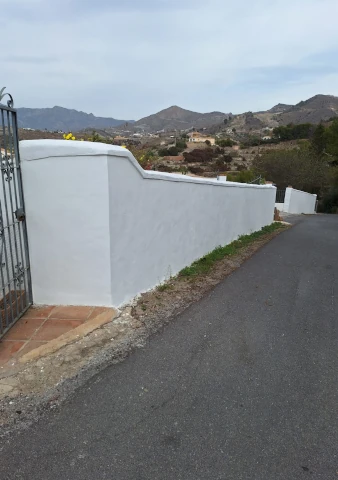
A typical exterior re-render is priced per job after a visit — wall area, access, scaffolding and the state of the substrate vary too much for a square-metre figure to mean anything. On timing, autumn and spring are ideal: renders and lime finishes need moderate temperatures and time to cure, and neither high-summer heat nor a wet winter week is kind to a fresh coat. We work on village and country walls across Frigiliana and the inland villages, where old construction and steep, damp-prone plots make the right render matter most.
Got cracked, blown or damp render? See our plastering and rendering service or send us a photo of the wall and we will tell you whether it is a repair or a re-render, in writing.