Tiles do more work on the Costa del Sol than almost anywhere: a terrace tile bakes at midday, cools at night, takes winter rain and the odd frost inland, and has to stay non-slip around a pool with wet feet on it. Choose the wrong one and it crazes, lifts or turns into a skating rink. Here is how we choose tiles for the Andalusian climate, indoors and out.
Porcelain, ceramic or natural stone?
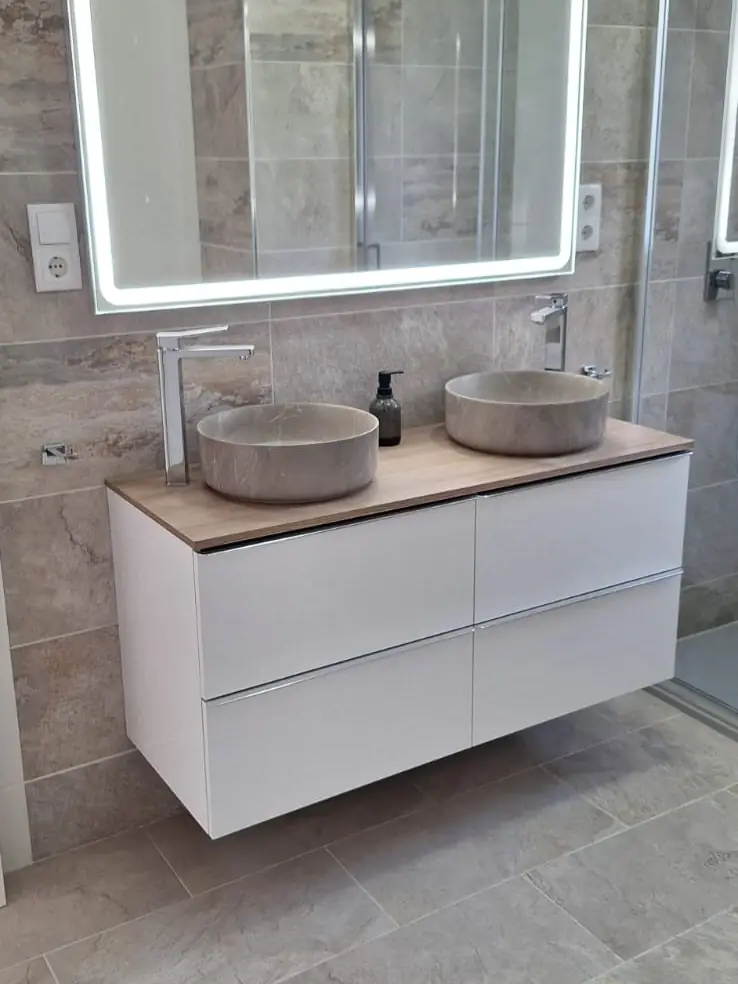
Outdoors, porcelain is usually the answer. It is dense, absorbs almost no water, holds its colour in strong sun and takes heat and cold without fuss. Ceramic is fine for most interior walls and floors but is softer and more porous — better kept indoors and out of the pool area. Natural stone is beautiful and characterful, but it is porous and needs sealing and upkeep; on a terrace or by a pool that maintenance is real, so go in with your eyes open.
Frost and thermal rating
On the coast, frost is rare; up in the villages and the campo it is not, and a winter freeze will shatter a tile that soaked up water in the wet. For anywhere inland or exposed, use a frost-rated porcelain with very low water absorption. The same density that resists frost also copes with the daily thermal swing of a south-facing terrace, which is what causes cheaper tiles to craze over a few summers.
Anti-slip around pools and wet areas
Around a pool or in a wet room, slip resistance is not optional. Tiles carry slip ratings — the barefoot "A/B/C" classes for wet areas and pool surrounds, and the shod "R" ratings — and there are proper standards for the space around a pool. We will not quote a smooth, glossy tile for a pool surround however good it looks in the showroom; the right choice grips wet feet without being so rough it cannot be cleaned. This is one to specify carefully rather than by picture.
Large formats and lippage
Big-format tiles are the current look and they suit these bright, open terraces — but they are less forgiving. Any unevenness in the base shows up as "lippage", one tile edge sitting proud of its neighbour, which looks bad and trips people. Large formats need a properly flat, well-prepared bed, the right adhesive and levelling clips, and an installer who takes the base seriously. It is as much about what is under the tile as the tile itself.
Light colours and heat
A dark terrace tile in full Andalusian sun becomes too hot to stand on barefoot by lunchtime. Lighter colours reflect heat, stay usable through the day and show less of the dust and salt that blow in off the coast. It is a small choice that makes a big difference to whether the terrace actually gets used in August.
Grout, expansion joints and the layer that matters most
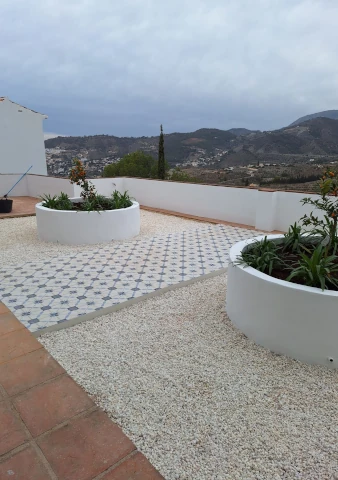
Outdoors, tiles move with the heat, so the job needs the right flexible grout and — the part people forget — expansion joints, or the whole field tents and lifts on the first hot spell. And underneath all of it, every terrace needs a proper waterproof membrane before a single tile goes down. Tiles and grout are not waterproof; the membrane is what stops water reaching the room below. Skipping it is the number-one cause of terrace leaks on this coast, which is why it is built into our tiling and terrace work as standard, and why it features in our guide to damp.
Where to see them
You do not have to choose blind. There are good tile showrooms in Torre del Mar and Vélez-Málaga where you can see large formats and pool-rated ranges in person, and we are happy to tell you which of what you like will actually perform where you want to put it. We tile terraces, bathrooms and pool surrounds across the coast, including plenty in Torre del Mar.
Planning a terrace, bathroom or pool surround? See our tiling and waterproofing service or send us the area and a photo for a free written quote.